

How Tina Touli turns the physical and digital into a distinct creative language
In this conversation, Tina Touli reflects on building a multidisciplinary practice shaped by experimentation, material exploration, and uncertainty, and how that way of working informs both her studio work and her role as an educator.
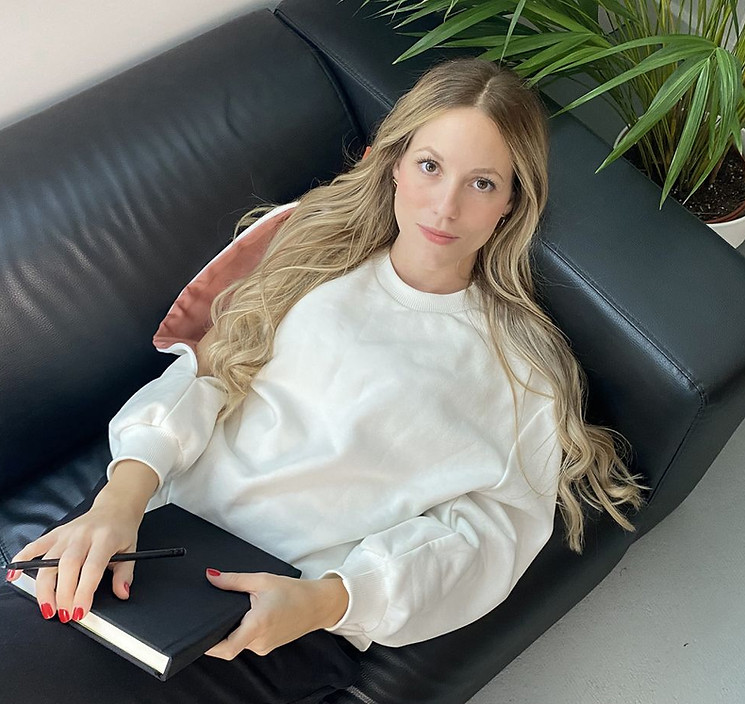
It sounds simple, but it’s not: not knowing what you’re doing is often where the work begins. Tina Touli is a London-based creative director and multidisciplinary graphic communication designer whose practice moves between the physical and the digital, where materials, light, and movement introduce a level of unpredictability that can’t be fully controlled. Rather than forcing outcomes, she follows what happens, letting ideas shift, break, and reform along the way.
That way of working carries through not just in her practice, but in how she teaches and shares it with younger creatives. In this conversation, we get into how that approach shapes her work across design, motion, and image, from experimenting with everyday materials to building a process that leaves room for things to evolve.
D: There's a lot of inspiration in everyday surroundings that most people walk past. How do you train your eye to actually see it?
Tina:
It really comes down to curiosity and slowing down. We’re used to looking for inspiration in very specific places, design platforms, social media, other designers’ work, but that often leads to repetition.
I try to approach everyday objects as if I’m seeing them for the first time. I’ll pick something very simple, a piece of paper, a glass of water, a ribbon, and start asking questions: What happens if I change the light? If I distort it? If I combine it with something else? It’s less about “finding” inspiration and more about training yourself to explore. The more you experiment with what’s already around you, the more your eye naturally starts noticing potential everywhere.

D: What did you have to figure out on your own that no one prepared you for?
Tina:
That not knowing what you’re doing is actually part of the process. In the beginning, I thought that being a “good” designer meant having clear answers, a structured process, and knowing exactly how to execute an idea from start to finish. But in reality, most of my work comes from uncertainty, trying things out, experimenting, and letting the process guide me. No one really prepares you for how messy creativity can be. Projects don’t always go as planned, ideas fail, and sometimes you have to start again from scratch. But that’s often where the most interesting outcomes come from. Understanding that this uncertainty is not a weakness but actually a strength was something I had to learn, and it completely changed the way I approach design.
D: Your work is known for blending the physical and digital worlds… Why do you keep going back to the physical?
Tina:
The physical world introduces unpredictability, and that’s something I really enjoy. Working with physical materials forces you to slow down, to observe, to react. You’re not just making decisions, you’re responding to what’s happening in front of you. Liquids move, light shifts, materials behave in unexpected ways. You lose a bit of control, and that’s where things become interesting.
Also, the physical adds a sense of tactility and authenticity that can sometimes feel missing in digital work. For me, it’s not about choosing one over the other, it’s about letting them inform each other. The physical creates, the digital enhances, and together they open up new possibilities.

D: What do you try to protect in your process when working with clients?
D: Which project shifted something for you?
Tina:
I try to protect the space for experimentation and the integrity of the concept. It’s very easy, especially in client work, to jump too quickly into execution or to dilute an idea through too many iterations. I always try to hold onto the core concept, the reason why the project exists in the first place, and make sure that every decision supports it.
At the same time, I protect the process itself. Experimentation, trying things out, even “failing”, these are essential parts of how I work. If that space disappears, the work can become predictable. So it’s about finding the balance between meeting the client’s needs and maintaining a process that allows for unexpected and meaningful outcomes.

Tina:
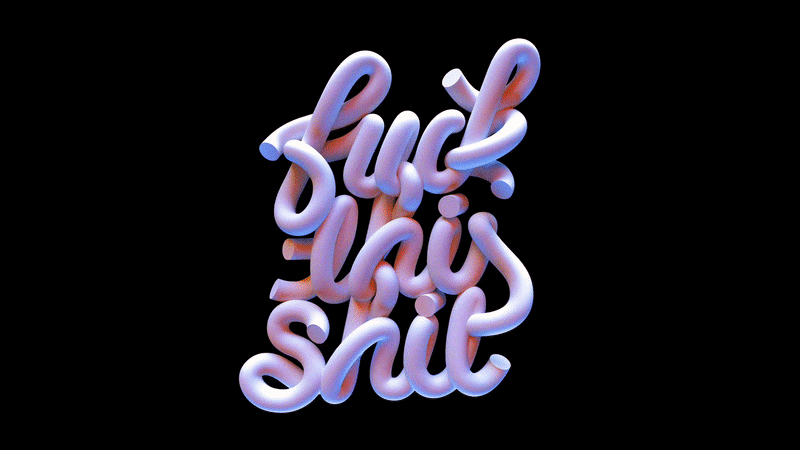
One of my favourite hands-on experimental projects was “What About Water”. It really pushed me to explore materials, processes, and interactions in ways I hadn’t yet before as much. Working on it sparked a curiosity to push boundaries and try more experimental approaches in my later projects. It was exciting to see ideas come to life physically, and that sense of discovery and creative freedom has continued to influence how I approach new challenges up to today.


D: Which project are you most proud of, and why?
Tina:
It’s really hard to choose just one. Usually, my favourite projects are either the most recent ones or the ones that brought me the most joy during the process. It’s not always about which project looks the most impressive; often, it’s about how enjoyable the experience of creating it was. For me, the process itself is one of the most important parts of making something. When I’m engaged and having fun while creating, that’s what makes a project truly meaningful.
D: How do you think about AI tools entering a world like yours?

D: Do you think something is at risk of being lost… or is that fear overstated?
Tina:
I see AI as a powerful tool. In my practice, much of the work comes from physical experimentation, working with materials, capturing something real and tactile. That hands-on process is inherently human.
AI can certainly support parts of the workflow, whether it’s testing variations, speeding up repetitive tasks, or exploring different directions. But the core idea, the concept, and the experimentation, still comes from the designer. Interestingly, I’ve noticed more and more people valuing even more nowadays the tactile, hands-on, human element, and often seek me out specifically for that reason.

Tina:
I don’t see AI as something to fear or resist. For me, it’s more about expanding possibilities. Tools will always evolve, and they can be incredibly helpful, especially when it comes to saving time.
The key is to make sure we don’t skip the creative thinking process. It’s important to keep experimenting, making mistakes, and exploring unexpected outcomes, because that’s often where the most interesting ideas come from.


D: What are you noticing in younger students right now?

D: What would you say to someone trying to find their own creative voice?
D: What advice would you give to your younger self?
Tina:
Students today are incredibly resourceful and connected. They have access to so many tools, tutorials, and references, which allows them to learn very quickly and experiment across different mediums.
At the same time, I notice that many of them start and finish their work digitally. So one of the things I try to encourage is stepping away from the screen, exploring physical processes, making things by hand, and embracing experimentation. Trying different tools, new technologies, and new ways of working.
Tina:
Your creative voice is not something you decide, it’s something you build over time. It comes from your experiences, your interests, your environment, and the way you approach problems. The best thing you can do is experiment as much as possible, try different techniques, different mediums, and see what feels natural to you.
And most importantly, don’t try to imitate others. Inspiration is important, but your goal should be to understand what excites you and follow that. Over time, your voice will naturally emerge.
Tina:
Probably to worry less about having everything figured out. In the beginning, I felt like I needed a clear plan, a clear direction. But looking back, the most important moments came from uncertainty, from trying things out, taking risks, making mistakes, and changing direction.
So I would say, trust the process, be patient, and don’t be afraid to take risks. You don’t need to have all the answers from the start.
Written by Debora Deva


Debbie is a writer, art director, and multidisciplinary creative at TOML Collective. With a background in advertising, she brings fresh perspectives to the journal — aiming to educate, question, and spark new ideas.
Get in touch with debora@tomlcollective.com