

Between Sound and Image: Working with James Blake, Dave, and Erick the Architect
A conversation with Josh Stadlen. For this feature, we get into his brilliant mind — his work across photography and music production, what influences his process, and why staying playful matters more than you think.

There’s a Post-it note on Josh Stadlen’s studio wall that says: Do you like it? He keeps it there as a reminder that most of it comes down to knowing when something actually feels right, and being honest when it doesn’t.
He’s spent years in the same room with incredible talent, including James Blake, Dave, A$AP Rocky, and Dom Maker, photographing the in-between moments of the process, catching their flow, and staying in the rhythm of it, while also working alongside them, not just observing but also being part of the process.
I spoke to Josh about his work across music and photography, what he’s learned from moving between the two, and his recent work, from his zine to his first release with Erick the Architect under excusemeplease.
D: You’re often backstage documenting musicians and creatives behind the scenes. What guides you in the way you photograph artists?
Josh:
Yes, I’ve been lucky to find myself in a lot of incredible rooms with a lot of incredible people. The way I approach these situations varies depending on all sorts of factors, such as how well I know the people I’m shooting, what the brief is, if there is one, etc. One fundamental rule I try to follow is to do nothing to interfere with whatever creative process is happening in that room. I don’t want my presence to change what would have been happening in the moments I’m capturing. Ideally, I’d be invisible, and nobody would even know I’m there.
Secondary to that is trying to be constantly dialled into the energy in the room so that I don’t miss key magic moments. There have been a few times I’ve kicked myself for not having my camera primed, and I’ve missed an incredible shot. Having said all that, there is definitely a balance; I don’t want to be so meek that I only end up with photos of people’s backs. I try to be confident in the moments I’ve chosen to capture, and if that means getting up close with someone, then that’s ok, so long as I’ve judged the feeling in the room correctly!

D: You’ve worked on records with artists like James Blake, slowthai, and Mount Kimbie. When you enter a studio with another artist, how do you usually find your place in the process?
Josh:
If it isn’t my session, then I don’t want to be one of those people who sit at the back of the room muttering melodies incessantly to try to get writing credit. I sit and listen, and if I have an idea that I think is worth expressing, I’ll speak up. I’ve been lucky to be involved with artists who are very generous with their collaborative spirit, so those moments
have always felt welcomed.

D: Your career moved between very different creative worlds, from London’s jazz scene to the studio environments of Los Angeles. How did those two cultures shape the way you think about music and creativity?
Josh:
I found the jazz scene in London incredibly competitive and self-focused. I’d go to a jam session where all the musicians are trying to show all the other musicians how much they’ve practiced. It was seldom about expression and connecting with people. My overarching memory of those times is a feeling of anxiety and competitiveness. I think that’s something the jazz scene is always going to struggle with because so much of the art form is dependent on technical ability for expression. People forget that the former is a means to the latter, not an end in itself. I’ve tried to take that lesson forward in my life as a producer/composer and tune out the part of my brain that wants to impress others/myself, instead focusing on the pursuit of expression and connection with others.

D: You’ve spent years both observing artists through photography and collaborating with them musically. Do those two roles, observer and participant, shape how you understand creativity?
Josh:
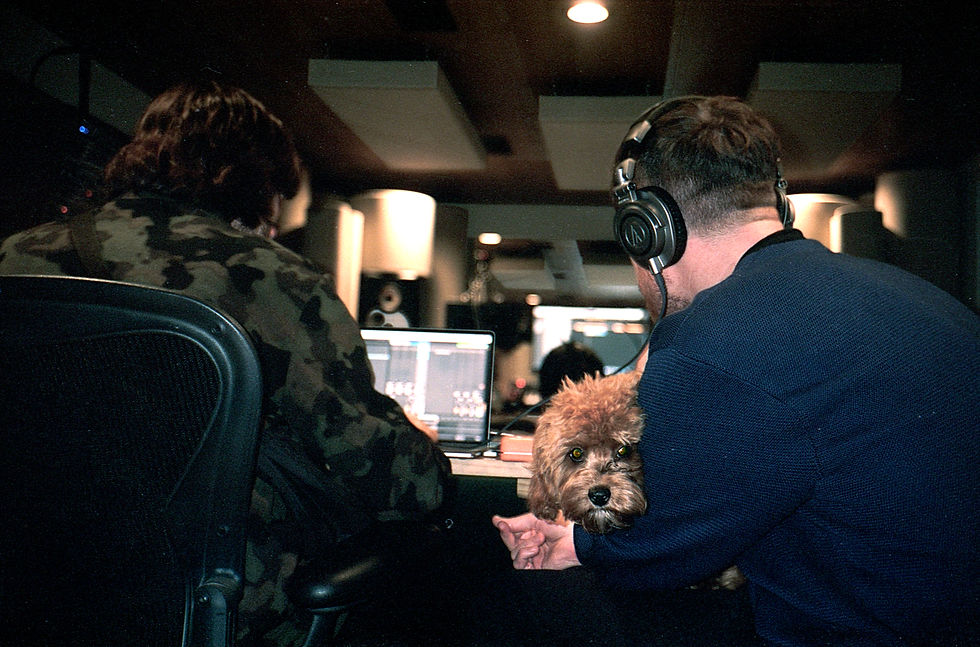
Yes, definitely. Observing people like James Blake and Dom Maker in sessions has served as a masterclass in production and creative process. I’ve learned a lot about how to approach creativity just through sitting behind a camera watching them work. I’ve taken so much from those sessions into my own musical approach. One of the most important lessons is the importance of clarity of instinct. Being able to hone in on our truest beliefs and feelings about what we’re working on is such a vital skill. Another important lesson is the importance of fun in the creative process: As much as possible, creation should be playtime. In my experience, the more playful the process, the more the end result connects with people. In fact, this is how Dom Maker and I wrote "Say What You Will" with James Blake.
Dom and I had been in his studio all day trying to make beats for rappers, but nothing was working out. We were about to call it a day when Dom asked if he could play me a sample he’d found. Neither of us really knew what we were listening to, but we both loved it. Without thinking too much, I jumped on a keyboard and recorded some chords over the top, while Dom worked on some drums. The process was pure playtime; neither of us knew who this piece of music would be for, or if it would be used for anything. We were just enjoying making music together. In the end, we sent it to James, and he recorded "Say What You Will" the same day.
D: You recently published your own zine, congratulations! What did the process of selecting and editing those images reveal to you about the way you tell stories through photography?
Josh:
In 2022, my friend, Raph Hurwitz (@mufjipower), invited me to print some of my photos in his dark room in Islington, London. Raph is actually the person who gave me my first analogue camera back in 2019, so I owe him a lot! He’s an amazing photographer; readers should check him out. It was the first time I’d seen my photography any larger than the dimensions of an iPhone, and the first time I’d held one of my photos in my hands. We’re so used to everything being palm-sized that I think we forget how small and unsatisfactory it is. Holding an A4 print of one of my favourite photos was a big moment in my early life as a photographer. It was also the moment I realised I wanted to create a physical publication.
Selecting the images for my zine was a long and agonising process because I’m a perfectionist. I wanted to try to represent as much of my identity as a visual artist as possible in that initial volume. I’m hoping the selection process for volume two will be less painful…!

D: Your style often keeps imperfections inside the frame. How did that visual language develop? Was it something intentional from the beginning, or something that emerged naturally over time?
Josh:
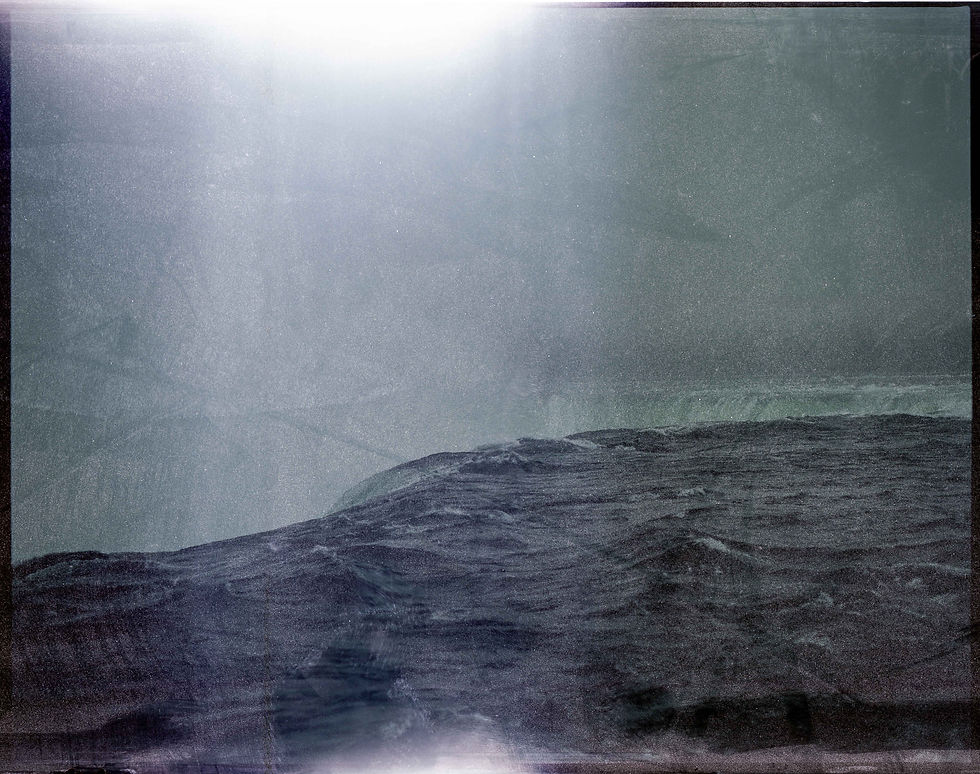
Generally speaking, I try to keep my photos as honest as possible, so I try not to do too many corrections in post as I’m trying to document reality. When I first started shooting film in 2019, I was developing all the negatives myself to save money, so a lot of those older pictures contain scratches and light leaks that I kept in the final images because I liked the effect.
I often enjoy when images contain both the subject matter and also the evidence that you’re looking at a physical object - the negative itself. That’s something you don’t have with digital photography, so I lean into it with film.

D: Looking back at your photography, are there a few projects or images that feel especially meaningful to you? ...What does that tell you about your creative instinct?
Josh:
The most meaningful photographs I’ve taken involve my friends and my family. I have so many photos from my years living in LA with my friends. At the time, they felt boring or like a waste of film, because I was focused on my images having technical value or being skillfully composed. Now that time has passed, and I’m no longer with them, they feel so important and meaningful.
I’ve learned that both technical mastery and emotional value are important and valid pursuits as a photographer, but not to get too hung up on the former!


D: When you think about your work across photography and music, is there a shared way you approach both? …Do those two mediums feed into each other, or do you try to keep them separate?
Josh:
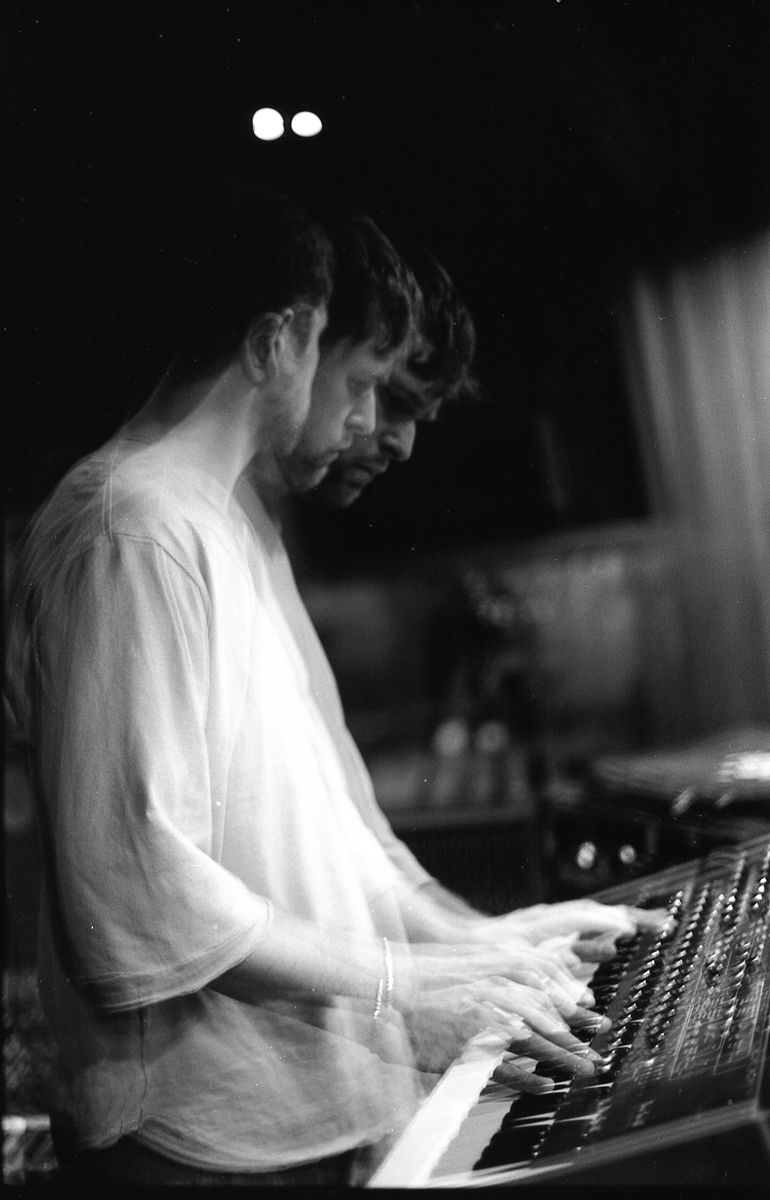
I keep them separate as much as possible. I see them as two distinct creative spaces; I can visit one when I need a break from the other. I get very overwhelmed when I’m working on music too much, and having a second creative outlet I can go to allows me to recharge my musical battery whilst still satisfying my creativity.
D: After years of contributing to other people’s records, what made this moment feel right to start releasing music under excusemeplease?
Josh:
I’ve always had this part of my brain telling me I’m not ‘good’ enough at music and that I had no place in the world musically. I ended up naming that part of my brain Dwayne so that I could more easily separate those thoughts from the others. Dwayne became an adversary for me to overcome. The final boss would be releasing my own music, because it's the one thing Dwayne never thought I should do. The main motivation behind releasing music was always just to prove Dwayne wrong and defeat him once and for all. Putting my first single out was a huge moment in that sense, and now I’m just excited to share everything else I’ve been making. I feel like I’ve made a platform for myself to explore all of the genres and styles that I love, from rap to electronic pop to ambient music, and I’m lucky to be working with some incredible collaborators, like Erick The Architect, Swavay, and Wedding Guest. It feels good to finally get out of my own way.


D: What’s one question you think everyone should ask themselves about their own work or creative path?
Josh:
Great question. When it comes to our creative instincts and our opinions on the art we’re making, I think there is a subterranean truth that everyone has access to with a bit of self-reflection. I try to look past the opinions I have about my art that stem from corrupt motives. “This is cool,” for example. Or “people will think I’m cool if I make this kind of music”. Or “This sounds like something _insert favourite artist_ would make”. Or even “I don’t want to have to work on this anymore, this will do”. Beneath these surface-level feelings is often a purer instinct which can be simplified to the question - does this feel good to me? Does this feel right? That’s a very difficult instinct to dial into sometimes, especially when it's competing with insecurity and doubts and corrupt motives. I’ve made stuff that objectively would seem wrong to a lot of people, but which has some purity of intention that just feels correct on some core level. Conversely, I’ve made stuff that I’m sure a lot of people would like, but which just feels untrue to me at my core. If you can tune into that instinct, I think you’ll discover your unique identity as an artist. I have a post-it note on my studio wall which says ‘do you like it?’, and it’s been one of the most important reminders to me recently. Often, the answer is no, and that’s a difficult truth to accept when pretending the answer is ‘yes’ would make for a much easier life. No leads to a deeper and more honest search for feeling in your art, and when you land on a ‘yes’, it’s the most liberating feeling in the world.
D: What inspires you?
Josh:
Being outside and listening to music by artists who aren’t afraid to take risks.
Written by Debora Deva


Debbie is a writer, art director, and multidisciplinary creative at TOML Collective. With a background in advertising, she brings fresh perspectives to the journal — aiming to educate, question, and spark new ideas.
Get in touch with debora@tomlcollective.com