

Is imperfection in design still meaningful when it's intentional?
We look at the thinking behind imperfection in visual language, and how the rise of AI is forcing a more honest conversation about what authenticity actually means.


Getting back to trashy, imperfect, not-so-astonishing visuals, it’s hard not to think about how grunge and punk made flaws feel not just acceptable, but desirable. Ripped denim, beat-up sneakers, DIY tattoos, photocopied posters, torn flyers pinned onto city walls, stick-and-poke tattoos that seemed to say “I’m not even trying,” yet somehow always looked right and had their own “thing”. And, just like that imperfection became a visual language of resistance. The point was never to make things look perfect. It was about attitude and showing the human touch behind it. Even dragging a fresh pair of shoes behind a car just to rough them up became its own small act of rebellion. What mattered was not perfection, but process. The wear, the distortion, the signs of use gave objects character and meaning. There was honesty in the roughness, something tactile and emotionally legible. Today, in an AI-heavy creative landscape, a very different visual standard dominates. Images are cleaner, sharper, and optimized. AI-generated aesthetics usually have symmetrical compositions, hyper-consistent lighting, flawless skin, polished gradients, and frictionless execution. Nevertheless, the “art of imitation” is still very present in AI-generated visuals, which is why many creators are now integrating raw, imperfect, and gritty elements into their work. Imperfection has returned, but under different conditions. What once emerged from necessity, budget limitations, DIY production, or anti-establishment thinking is now also becoming a response to algorithmic sameness and synthetic polish.
Imperfection in creative work has never been about visible flaws. At its strongest, it functions as a signal of humanity.
Yeah, it's a bit wonky. 🤘


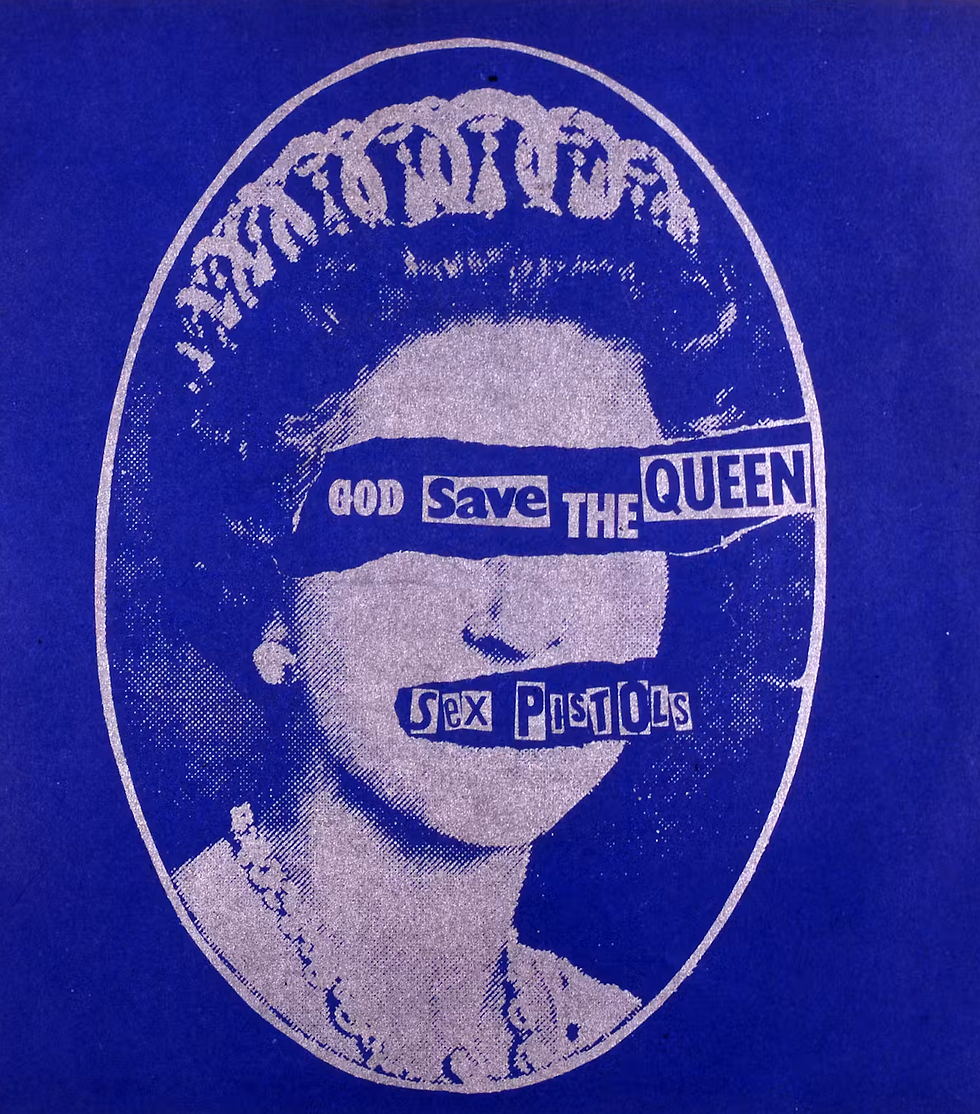

Irregularity, incompleteness, and signs of process have long carried meaning. In Japanese aesthetics, the concept of wabi-sabi offered a direct argument for this: that beauty is inseparable from impermanence, that a cracked glaze or an asymmetric form tells the truth about time in a way that perfection cannot. The tea ceremony, the hand-thrown pot, the weathered garden: these weren't accidents tolerated; they were the point. Imperfection wasn't a failure of craft but an expression of it. That sensibility existed in craft traditions elsewhere too, in textiles, ceramics, and woodwork, where wear and asymmetry were inseparable from value itself. But it was rarely framed as a philosophy. It was simply how things were made when materials and time left their mark. What changed in the twentieth century was intention. Improvisational practices in music — jazz and later free improvisation made unpredictability a method, not a mistake. Chance wasn't something to correct for; it was something to follow. John Cage formalised this in ways that pushed into visual art and performance, opening a door between accident and authorship. By the time punk arrived in 1970s Britain, that door was already open. Punk's visual language emerged from necessity as much as ideology: no budget, no access, no permission. Photocopied textures, fragmented typography, rough collage, and visual misalignment were partly what happened when you made things fast and cheap. But they also became a statement. Designers like Jamie Reid treated graphics as part of the protest itself; the ransom-note aesthetic of Never Mind the Bollocks wasn't chaotic by accident, it refused to look like something the establishment would produce. David Carson pushed this further in the 1990s, breaking typographic convention so completely that legibility itself became optional. What united Reid and Carson wasn't a shared politics but a shared refusal to dress things up, to perform coherence, to pretend the surface was the whole story. What began as a material limitation had become a recognizable visual language. One that didn't reject perfection so much as reject artifice.
Today, digital tools make it easy to recreate what used to come from limitations. Glitch effects, anti-design layouts, handmade-looking interfaces, neobrutalist systems. What once came from constraints, time, access, and resources can now be applied on demand. That shift changes how imperfection works. It’s no longer only something that emerges from the process. It’s also something that can be chosen, adjusted, repeated. Which is why it helps to separate the two. What makes the return of imperfection today particularly interesting is that it no longer emerges accidentally. It is often intentional, curated, and strategically designed. Brands increasingly mimic lo-fi aesthetics, raw photography, uneven typography, disposable-camera flash, handwritten notes, or unpolished social edits to create the feeling of authenticity. Campaigns that appear spontaneous are often carefully art-directed to preserve just enough roughness. Even luxury fashion has embraced this shift. Overstyled perfection now risks feeling corporate, generic, or AI-generated, while imperfection signals taste, individuality, and cultural awareness. This is partly because today’s visual culture is highly optimized. Most digital platforms reward content that is clean, fast, consistent, and instantly understandable. AI tools push this even further, making polished visuals easier than ever to produce at scale. But when everything becomes too smooth and perfected, it can start to feel emotionally flat. In this context, imperfections start to feel like proof that a real person was involved. A shaky camera movement, uneven typography, visible grain, awkward cropping, overexposed flash photography, or signs of manual editing all read differently. In a landscape increasingly shaped by automated image generation, flaws become reassuring precisely because they resist seamlessness.
The irony, of course, is that imperfection itself can become aestheticized and commodified. Once “rawness” becomes a trend, it risks turning into another formula, another layer of performance. Which raises a larger question: when imperfection is deliberately manufactured, does it still carry the same honesty it once did?
Or has authenticity itself become a visual strategy?
When Wonky Works


Perhaps what people are searching for is not imperfection alone, but evidence of human intention within increasingly synthetic environments. In an era where images can be generated instantly and endlessly refined, imperfections no longer necessarily read as mistakes. More and more, they read as presence.
Burberry's Winter 2025 show teasers, created with Blinkink, used hand-stitched embroidery instead of standard digital animation. Every frame was sewn by hand, with thirty seconds of footage taking four weeks to complete. The project builds on Burberry's broader focus on craft, but what makes the work compelling is that the imperfections come directly from the process itself. The uneven stitching, slight inconsistencies, and tactile quality are not effects added afterward to simulate authenticity. They are traces of labour, time, and material limitations made visible in the final result — scars from the actual making, not costume jewellery pinned on after the fact. A similar relationship between process and imperfection appears in Scary Boots, a London-based arts and literature zine by Elias Myer, which embraces what he describes as a "chaos of imperfections." Each issue is Risograph printed and assembled through a hands-on editorial process that combines writing, collage, photography, illustration, and poetry. The printing process naturally introduces misalignments, colour shifts, grain, and small registration errors that cannot be fully controlled. But those irregularities are precisely what give the work its character. Rather than aiming for seamlessness, the publication allows the process to remain visible. Both projects are asking the same quiet question, really — what if the thing that makes work feel real is precisely the part you didn't plan for?
In many ways, what people respond to in projects like these is not imperfection itself, but the feeling that something real happened in the making of them. That distinction becomes more complicated in the context of AI-generated work. Analogue methods and imperfections do not automatically gain value simply because AI exists. Rough textures, distorted forms, or "human-looking" flaws can easily be replicated digitally. Once those signals become easy to imitate, they risk losing the meaning they once carried. A fake roughness applied through filters or post-production does not necessarily hold the same weight as something shaped by actual constraints, experimentation, or material process. The question, then, is less about choosing analogue over AI, and more about how AI is used and Bård Edlund's Celebrities Kissing Themselves sits right at that fault line. The series consists of AI-generated 3D portraits of famous figures kissing distorted versions of themselves, and rather than hiding the limitations of the system, Edlund amplifies them. Using Genie by Luma Labs, he generated imperfect 3D forms where faces melted together, surfaces warped, and proportions became unstable. Instead of correcting those flaws, he treated them as part of the work itself. He later imported the models into Blender, where polished lighting setups similar to luxury advertising or automotive campaigns made the distortions even more visible. The result is interesting precisely because it does not pretend the technology is seamless. The work allows the machine's instability to remain exposed.
This points to an important distinction that designer Elizabeth Goodspeed names directly: attempting to digitally imitate "realness" simply to distance work from AI-generated aesthetics does not necessarily move the conversation forward — if the goal is to prove something wasn't made by AI, faking authenticity on a computer doesn't really get us anywhere new. There is a meaningful difference between using technology to flatten work into optimized outputs and using it as part of an exploratory or collaborative process. AI can support research, experimentation, prototyping, or technical execution without replacing human judgment or creative intention. The value no longer lies in the tool alone, but in whether the process behind the work still feels visible.
“If the goal is to prove something wasn’t made by AI, faking ‘realness’ on a computer doesn’t really get us anywhere new.” - Elizabeth Godspeed

The Good Bits Are Usually Messy


Here's the thing nobody in a brand meeting wants to say out loud: 2026 is starting to look a lot like a creative hangover. After years of every major rebrand arriving in the same generic sans-serif, every campaign colour-graded into submission, and every aesthetic flattened into something safe enough to A/B test — culture is swinging back. Hard. Grunge branding is back, indie sleaze is back, and the DIY chaos that the clean girl aesthetic spent half a decade trying to bury is tapping brands on the shoulder again. And it makes sense, because when does culture ever just stay put?
The punk movement of the 70s was a rejection of mainstream commercialism and authoritarianism, and we're culturally locked into something not entirely different today. Take Cadence x furiesrunning, a hydration brand that ran an unsanctioned relay last summer called Short Fuse, leaning hard into punk aesthetics and anarchist messaging. A middle finger to the over-optimized, try-hard perfectionism that wellness brands built their whole identity around. It worked. Beyond aesthetics, the same impulse is showing up in wellness culture more broadly — the images overtaking your feed of someone running a marathon with a cigarette, or heading straight from a sauna to a party, because optimization fatigue is real and people are quietly done performing their own health. In an era where polished AI visuals are cheaper and faster to produce than ever, analogue techniques and mixed media are becoming a premium precisely because of this. Interestingly, we are craving more human-made work, rawness, and imperfection. The point, as one reading of all this goes, is not that work has to be clean to land. It just has to be clear. And sometimes, clarity looks a lot like chaos.
Which is exactly the kind of room Perfectly Imperfect and Back Market built on a Saturday night in New York. Perfectly Imperfect is the cult newsletter and recommendation platform that built its reputation on algorithm-free taste, the kind of place where good things get shared because they're genuinely worth it, not because an ad budget said so. And it's that same instinct, that imperfection isn't a flaw to fix but a quality worth celebrating, that brought them together with Back Market, making the case that the stuff we've scratched up and lived with might actually be the stuff worth keeping. Nearly 200 creatives and tastemakers filled Silence Please on Bowery, moving through live tattoo activations, vintage tees, and campaign visuals while four DJs carried the energy from one end of the night to the other. Guests got pulled aside mid-drink for quick interviews — what's your favourite ugly thing? which sounds like a throwaway icebreaker until you realise it's the whole thesis. The night centred on Back Market's Ugly Computer collection: perfectly functional MacBooks with scars, sticker residue, and cosmetic stories that most brands would quietly bury, saved instead from a waste stream the industry rarely wants to talk about. It's a neat bit of tension, really, a room full of people chasing cool, gathered specifically to celebrate the un-polished. Which, depending on how you look at it, is either the most honest thing a brand has done in a while, or just the newest way to make imperfection aspirational.
So where do we go from here?

Truth be told, the interesting question isn't whether imperfection is having a moment, it clearly is. The harder question is what survives once the moment passes. Trends have a pesky habit of consuming the very thing that made them worth paying attention to, and rawness is no exception. The brands that will carry this forward aren't the ones that hired an agency to make their Instagram grid look more chaotic. They're the ones that built something genuinely unresolved into the process itself, the brief, the making, the way decisions get made. What's emerging, slowly and a little awkwardly, is a creative culture that's less interested in the finished object and more interested in whether you can feel the thinking behind it. Not handmade for the sake of handmade, not grungy for the sake of grungy, but work that carries the fingerprints of actual human judgment, the wrong turn that became the right one, the constraint that forced something unexpected. And yes, AI will be part of that future, not as the thing that flattens everything into optimized sameness, but as a tool inside a process that still has a person at the centre of it.
The brands and creatives that figure out that balance, messy enough to feel real, intentional enough to mean something, are the ones who won't need to perform imperfection. It'll just be visible at work. Which is, if you think about it, exactly what it always was.
Written by Debora Deva


Debbie is a writer, art director, and multidisciplinary creative at TOML Collective. With a background in advertising, she brings fresh perspectives to the journal — aiming to educate, question, and spark new ideas.
Get in touch with debora@tomlcollective.com